




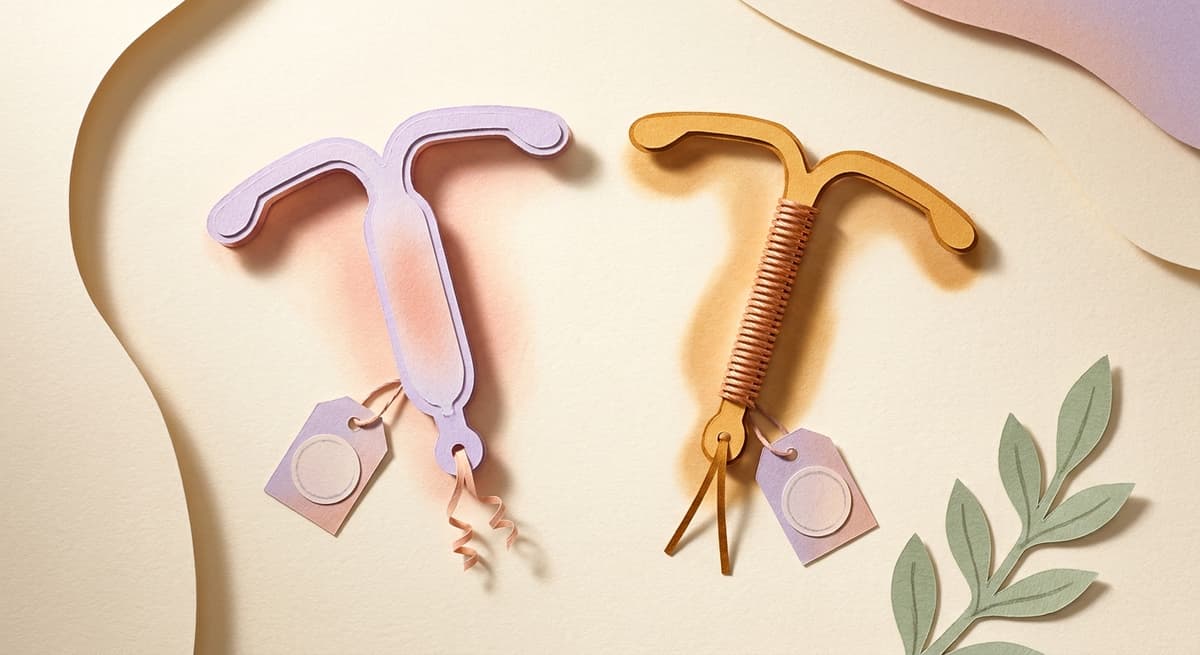
If you have decided that an IUD is the right birth control choice for you, the next question is: hormonal or copper?
Both IUDs are tiny, T-shaped devices placed inside the uterus during a brief in-office visit. Both are over 99% effective. Both last for years. And both are fully reversible: your fertility returns immediately after removal. But they work through entirely different mechanisms, produce different side effects, and are better suited for different women.
This guide breaks down the real-world differences so you can walk into your MomDoc appointment with clarity.
How They Work
Hormonal IUDs (Mirena, Liletta, Kyleena, Skyla)
Hormonal IUDs release a small, continuous amount of levonorgestrel (a synthetic progestin) directly into the uterus. Because the hormone is localized, only trace amounts enter your bloodstream.
The progestin works through three mechanisms:
- Thickens cervical mucus, creating a physical barrier that blocks sperm from reaching an egg.
- Thins the uterine lining, making it difficult for implantation to occur.
- May suppress ovulation in some women, though this is not the primary mechanism.
Copper IUD (Paragard)
Paragard contains zero hormones. Instead, a small amount of copper wire wrapped around the T-shaped frame creates an environment inside the uterus that is toxic to sperm. The copper ions impair sperm motility and viability, preventing fertilization.
This is the only highly effective, long-term, hormone-free reversible contraceptive available.
The Head-to-Head Comparison
| Feature | Hormonal IUD | Copper IUD |
| Effectiveness | Over 99% | Over 99% |
| Duration | 3–8 years (varies by brand) | Up to 10 years |
| Contains hormones | Yes (localized progestin) | No |
| Effect on periods | Lighter periods; ~20% of users stop menstruating entirely | Periods may become heavier and more crampy, especially in the first year |
| Emergency contraception | No | Yes, if inserted within 5 days of unprotected sex |
| Safe while breastfeeding | Yes | Yes |
| Immediate effectiveness | Effective immediately if inserted within 7 days of your period start; otherwise use backup for 7 days | Effective immediately |
Who Each IUD Is Best For
Choose a Hormonal IUD If:
- You have heavy, painful periods. Hormonal IUDs are FDA-approved to treat Heavy Menstrual Bleeding (HMB). Most women see a dramatic reduction in bleeding within 3–6 months.
- You want lighter or absent periods. If the idea of significantly reducing or eliminating your period sounds appealing, this is your option.
- You want long-term protection with minimal systemic hormones. The progestin stays localized in the uterus, meaning far less hormonal exposure than pills or patches.
Choose the Copper IUD If:
- You want zero hormones. If you are sensitive to hormonal side effects, or simply prefer a hormone-free body, Paragard is the gold standard.
- You need emergency contraception. The copper IUD is the single most effective form of emergency contraception when inserted within 5 days of unprotected intercourse.
- You want the longest-lasting reversible option. At up to 10 years, Paragard offers the longest protection of any reversible method.
Side Effects: What to Expect
Hormonal IUD Side Effects
The most common side effect during the first 3–6 months is irregular bleeding and spotting. This typically improves significantly over time. Other potential side effects include mild headaches, breast tenderness, nausea, and mood changes. Ovarian cysts can occasionally form but are almost always harmless and resolve on their own.
Copper IUD Side Effects
The most common side effect is heavier menstrual bleeding and increased cramping, particularly during the first several months. Some women also experience spotting between periods. These side effects tend to diminish within the first year. Unlike hormonal IUDs, the copper IUD has no hormonal side effects whatsoever.
Pain Management at MomDoc
The insertion procedure takes only a few minutes. You may feel cramping, a pinch, or pressure as the IUD passes through the cervix. At MomDoc, we strictly follow ACOG's 2025 updated guidelines on IUD pain management and routinely offer:
- Local anesthesia (cervical lidocaine block) to numb the cervix before insertion.
- Pre-procedure ibuprofen recommendations.
- Supportive guidance throughout the procedure so you know exactly what to expect at each step.
Your comfort is always our priority.
Risks (Rare but Important)
Both types of IUD share the same rare risks:
- Expulsion: The IUD partially or fully comes out of the uterus (roughly 2–10% of users, most often in the first few months).
- Perforation: In very rare cases, the IUD can pierce the uterine wall during insertion.
- Ectopic Pregnancy: If pregnancy does occur with an IUD in place (extremely rare), there is an increased risk of it being ectopic (outside the uterus).
Neither type of IUD protects against sexually transmitted infections (STIs), including HIV. If STI protection is needed, condoms should be used alongside the IUD.
The Decision
Both IUDs are among the most effective, safest, and most cost-effective birth control methods available. The right one for you depends on how you feel about hormones, how you want your periods to change, and how long you want protection to last.
Your MomDoc provider can walk you through the specifics based on your unique medical history during a comfortable, private consultation. We offer same-day appointments across Arizona.
This content is for informational purposes only and does not replace professional medical advice. A MomDoc provider must evaluate your medical history to determine which IUD is safe and appropriate for you.